Working With the Stars In Earthly Substance
The Solar Eclipse, June 29th, 1927
By Lilly Kolisko
Experimental Studies From The Biological Institute Of The Goetheanum With Three Multi-Coloured and Twenty Single Coloured Plates. Orient-Occident Verlag, Stuttgart-Den Haag-London, 1928
FOREWORD
In the essay Workings of the Stars in Earthly Substances, published a few months ago, the attempt was made to show by means of scientific experiments that the stars in the heavens play a very real part in happenings on Earth. The experiments were carried out with the metallic salts of silver, iron and lead. The workings of these metals, in normal conditions, both by day and by night, in full daylight and also in a dark chamber, were illustrated by a series of pictures. We were then able to show that fundamental changes occur at the time of a conjunction of Saturn and Sun. Indeed the activity of salts of lead appears to be wholly suspended at the time of the conjunction.
In this present essay, we shall show, again by means of pictures painted by the Cosmos itself, how the total eclipse of the Sun on June 29th, 1927, was mirrored in the metallic salts of gold, silver and tin.
Gold, the physical representative on Earth of the Sun, and silver, the physical representative on Earth of the Moon, are obviously the sub-stances most suited to present in picture form, the darkening of the Sun by the Moon.
Once again we must emphasize that his essay represents merely a tiny fragment of extensive work. Unbroken study of many years has enabled us to create a basis which justifies us now in placing the results of our research before the world. May the minds and hearts of men be open in order that the Sun may shine into them when the physical Sun is darkened.
Stuttgart, September 29th, 1927. L. Kolisko
Before we can speak of the reflection of the solar eclipse in earthly substances, it is necessary to say something about the particular substances that were used as a basis for the experiments.
EXPERIMENTS WITH GOLD
It is curiously interesting to experiment with gold. The first experiments we carried out with gold some years ago, consisted in dissolving it in aqua regia (nitric acid / hydrochloric acid mixture) and evaporating the superfluous acid so that we finally had gold in solution as chloride of gold. This solution of chloride of gold was rhythmically diluted — that is to say, raised to a higher potency — and then the different potencies were sprinkled on grains of wheat. For a fortnight, the wheat germinated and grew under the in-working forces of the gold potencies and the result of the measurements was a wonderfully harmonious curve. To begin with, then, we investigated the effect of gold on the growth of plants. Simultaneously, we tried to produce evidence of the effect of very highly diluted substances by means of the capillary-analytical method, inserting strips of filter paper in small glass vessels each containing one of the different potencies. Through the course of the year we investigated in this way different plant extracts and metallic salt solutions of silver, quicksilver, copper, gold, iron, tin, lead, antimony and so forth.
Apart from the study of the effect of the potency, we observed the pictures produced by gold, silver, copper, iron and how the pictures changed in the course of a month, a year and, finally, in the course of several years. The results of these investigations will have to be dealt with in greater detail in an essay devoted entirely to the subject of gold.
For the sake of explaining the experiments described in this present book, however, we add these few very brief remarks about gold.
We use chloride of gold (aurum chlor. cryst. fuscum) as applied by E. Merck of Darmstadt for industrial purposes, dissolving 1 gramme in 100 ccm. of distilled water. Gold dissolves very rapidly and the water becomes at once a golden-yellow colour. We pour 10 ccm. of this solution into a glass vessel and insert a strip of filter paper.
In the case of the pictures of silver we find that the wealth of forms is so great that it is impossible to present one picture only of silver. Hundreds of pictures would have to be shown before any conception can be gained of the wealth of the forms. In the case of gold, the colours are so rich that many pictures must be observed before we can realise the nature and character of the metal. The colours that make their appearance vary between pure yellow and dark violet. We find every shade of yellow up to brown, also shades of rosy pink, purple, blue, light to dark violet. Plate I is a coloured picture of gold in so far as the colour can be reproduced.* It was taken on December 25th 1926, in a dark chamber, and proves that light has no direct influence upon the manifestation of the colours.
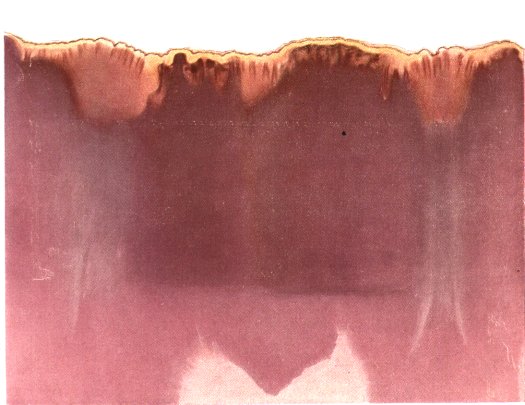
Plate I Gold Chloride, 25.12.26
When we have gold in a state of solution, the Sun — according to the indications given by Rudolf Steiner — is working in it. The time of a solar eclipse is therefore highly favourable for observing the changes appearing in gold.
For Stuttgart, the time of the eclipse was given as 5.19 a. m., June 29th. I decided, therefore, to insert filter paper in a solution of gold on June
29th at 5.19 a. m. and to allow the picture to form under the influence of the solar eclipse. The usual picture of a solution of gold was familiar to us as the result of many experiments. In order, however, to discover the appearance presented by gold immediately before the solar eclipse, it was necessary to carry out experiments with chloride of gold several days before, at 5. 19 a. m. — that is to say, at the same moment when the eclipse would occur on June 29th. On account of the high cost of reproduction it has unfortunately been impossible to print in colour all the pictures of gold.
Plate II shows the gold on June 27th and 28th.
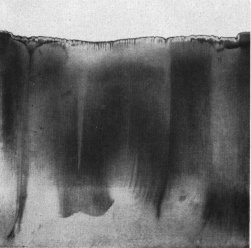
Plate II, top, Gold Chloride, 27.06.27, 05.19h

Plate II, bottom, Gold Chloride, 28.06.27, 05.19h
On June 27th we have a normal picture of gold, whereas on June 28th it has become somewhat cloudy. Various specks and strokes have made their appearance and the picture looks almost dirty.
Plate III shows the gold on June 29th, at sunrise and at 5.19 a.m., the time of the solar eclipse.

Plate III, top, Gold Chloride, 29.06.27, sunrise

Plate III, bottom, Gold Chloride, 29.06.27, 05.19h, beginning of solar eclipse
Plate IV shows the gold on June 29th at 7 a. m., and again at 5. 19 p. m., after the eclipse. The picture obtained at the time of the eclipse manifests the above-mentioned phenomenon still more strongly. A large number of specks have appeared. The colours are not so luminous as on other occasions; their tones are mostly brownish-red dirty violet. It is altogether an unpleasing picture.
On June 29th at 5. 19 p. m. the picture of the gold has become quite clean again; the colours are more luminous but they have not yet assumed their natural, inherent beauty and purity.

Plate IV, top, Gold Chloride, 29.06.27, 07.00h

Plate IV, bottom, Gold Chloride, 29.06.27, 17.19h
EXPERIMENTS WITH SILVER
We have chosen, from a continuous series, pictures of silver taken two days before the eclipse, on the actual day of the eclipse and the two following days. in the first publication — Workings of the Stars in Earthly Substances — we included a picture of silver, referring to an essay dealing entirely with silver which will shortly be published. The pictures in this present work are obtained in the following way: Between 8 a.m. and 9. a.m. a solution of nitrate of silver (1 gramme in 100 can. of distilled water) is poured into a glass vessel into which the filter paper is dipped. The silver rises, attaining its maximum height after two or three hours and is coloured by the light and air. According to whether the Sun shines more or less strongly, the tones of the colour vary from light to dark brown. No matter how much silver is contained in the vessel, when the maximum height is attained, the surplus silver remains stationary in the vessel and the filter paper is worked upon simply by the light and the air. Towards evening, when the Sun is setting, the fluid begins to rise still higher and oversteps the boundary set up during the day. The extent to which the fluid’ rises by night is dependent upon the general weather conditions and the resulting temperature and moisture of the air. When the air is moist and the night cold, the fluid rises higher than when the air is dry and the temperature warm. At night, therefore, there is a second ascent of the fluid in the filter paper and when the second boundary has been reached, a second picture is formed — the night picture.
Plate V is a picture taken by day and Plate VI shows the night picture placed with it. These pictures cannot be obtained in the laboratory but only in the open air, under a glass bell or glass frame.
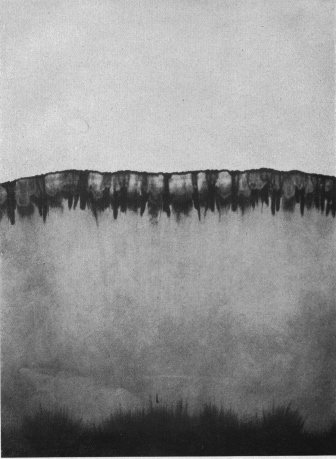
Plate V, Silver Nitrate, picture taken by day

Plate VI, Silver Nitrate, picture taken by day and night
We now pass to the pictures taken before and after the solar eclipse: Plate VII Silver on June 27th, day and night. Plate VIII Silver on June 28th, day and night. Plate IX Picture taken on June 29th, the day of the eclipse. Plate X June 30th, day and night. Plate XI July 1st, day and night.

Plate VII, Silver Nitrate, 27.06.27, day and night

Plate VIII, Silver Nitrate, 28.06.27, day and night

Plate IX, Silver Nitrate, 29.06.27, day of the eclipse, day and night
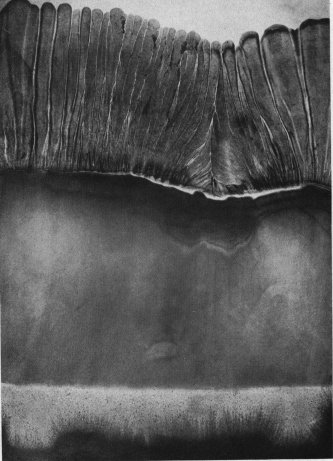
Plate X, Silver Nitrate, 30.06.27, day and night

Plate XI, Silver Nitrate, 01.07.27, day and night
The facts speak for themselves and there is no need to waste many words about them. On June 29th, the silver is not at all the same as at other times in the month of June. The pictures must be allowed to tell their own story and we must give ourselves up simply to the effect they produce. Each single picture portrays a definite force that is regulating the substance and is working in accordance with definite law in the inner structure of the picture. On June 29th, one gets the impression that something has fallen into disorder. Chaos is reigning; different forces are struggling together for the mastery. It seems to me that this arises as an entirely objective impression if, without any preconceptions whatever, one allows the pictures to work upon one. The impression of course is all the stronger when one has been able to observe the pictures not only on the two days immediately preceding and following the solar eclipse but a long series, taken, say, on the thirty days before and the thirty days following the eclipse. The impression made by this curious silver formation on June 29th is then much stronger. These sixty pictures of silver have all been reproduced and we should at any time be able to publish them. Some at any rate will certainly be able to be brought out.
EXPERIMENTS WITH GOLD AND SILVER
We have now considered gold by itself and silver by itself, in normal conditions and at the time of the solar eclipse. The eclipse comes about because the Moon passes between the Earth and the Sun. In the Cosmos, therefore, there is a very special relation and interworking between Sun and Moon. This interworking of the two heavenly bodies is also expressed when the two earthly substances representing Sun and Moon are combined. We must therefore unite chloride of gold and nitrate of silver at the time of the eclipse. Here again it would need a separate essay to speak in detail of the combined working of silver and gold but once more we must unfortunately limit ourselves to a minimum. Most wonderful forms arise when gold and silver unite — the form-building force of silver, of the Moon, working in the wealth of colour inherent in gold!
Plate XII is the coloured reproduction of a picture of silver and gold together, taken on March 21st, 1927, at the beginning of Spring. The same concentration of both silver and gold — 1 gramme in 100 ccm. —is used and the solutions are mixed in equal quantities.

Plate XII, Gold Chloride & Silver Nitrate, 21 March 1927
Next we pass to the solar eclipse and see how it is reflected in the interworking of silver and gold.
Plate XIII shows silver and gold on June 28th at 5.19 a. m. and on June 29th at 5.19 a. m. (beginning of the eclipse).

Plate XIII, top, Gold Chloride & Silver Nitrate, 28.06.27, 05.19h
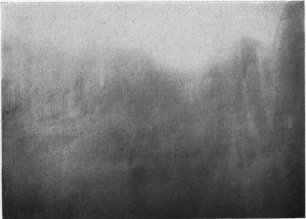
Plate XIII, bottom, Gold Chloride & Silver Nitrate, 29.06.27, 05.19h, beginning of solar eclipse
It is really awe-inspiring to see from a study of Plate XIII how utterly differently silver and gold work on the Earth when up in the heavens the Moon is covering the Sun! The picture has no particular form or colour. The colours are washed out, a greyish violet. The experiment was repeated many times on June 29th. The relation of gold and silver was practically normal at 2.30 p.m. on this day.
Intimate knowledge of the working of these two substances enables us to say that the picture which arose at this hour still indicates a slight preponderance of silver.
As a rule, the reaction of silver and gold brings about an immediate sediment golden-yellow in colour. At 5.19 a.m. on June 29th this sediment was not golden-yellow but brown, soon darkening to black. The silver was working more strongly than the gold and to a certain extent this phenomenon was still apparent at 2.30 p.m.
At 5.19 p. m. the reaction became quite normal and the picture had assumed its ordinary appearance. Plate XIV is a picture of silver and gold’ taken on June 29th at 7.16 a. m. towards the end of the eclipse. We have also added the picture taken on the same day at 5.19 p.m.

Plate XIV, top, Gold Chloride & Silver Nitrate, 29.06.27, 07.00h
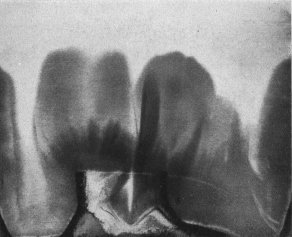
Plate XIV, bottom, Gold Chloride & Silver Nitrate, 29.06.27, 17.19h
EXPERIMENTS WITH GOLD AND TIN
We were of course also interested to study the behaviour of gold in relation to other metallic salts during the time of the eclipse. As well as the experiments with silver, gold and the two together, we carried out a long series of others, with gold and lead, gold and tin, gold and iron, gold and copper, gold and mercury, etc. The relation of the gold to lead was the least disturbed, the longest and most intense disturbance being manifest in its relation to tin. At some future time more will be said about this experiment.
When solutions of gold and tin are united, they give rise to a highly interesting combination, well-known to chemists. This combination produces the so-called ‘gold-purple of Cassius’ but — I merely mention this in passing — not always. There are times when the most wonderful gold purple appears, immediately solutions of tin and gold are poured together and again there are times when absolutely nothing is to be seen. The golden-yellow changes into a light green but there is no purple. Now we observed that during the month of June, 1927, there was no purple reaction from gold and tin. The colour of the sediment was only light green and after some hours there was a slightly darker precipitation. On June 27th the reaction of gold-tin was more vivid and after five minutes a light purple appeared. On June 28th the reaction set in very rapidly; the colour at once became violet and the whole picture changed considerably.
Plate XV is a normal picture of tin-gold in coloured reproduction.

Plate XV, Gold Chloride & Tin Chloride, 08.06.27
In order to show more or less the general character of the pictures of tin and gold during the month of June, we show in Plate XVI those taken on June 12th and 24th.

Plate XVI, top, Gold Chloride & Tin Chloride, 12.06.27

Plate XVI, bottom, Gold Chloride & Tin Chloride, 24.06.27
Plate XVII shows gold and tin at 5. 19 a. m. on June 28th after the strong reaction described above, also gold and tin at 5. 19 a. m. on June 29th at the time of the solar eclipse. The gold and the tin have scarcely contacted each other and the golden-yellow has changed into a blackish hue. At the same moment there is a strong precipitation. The solution becomes thick and appears as though coagulated.

Plate XVII, top, Gold Chloride & Tin Chloride, 28.06.27, 05.19h
Plate XVII, bottom, Gold Chloride & Tin Chloride, 29.06.27, 05.19, at the beginning of the solar eclipse
According to the picture, the gold is not working. The fluid ascends to a comparatively high level. (Taking the experiments as a whole, the height attained by the fluids on the day of the eclipse was greater than usual, a fact which is probably explained by the stronger influence of the Moon.) The strip of filter paper, however, remains perfectly white. At the bottom there appears a dark violet line, practically horizontal.
The pictures of tin and gold have, as a rule, something extraordinarily pure and delicate about them. To find this sudden abnegation of gold was, therefore, an event of great significance, for it can only be described as an abnegation of the gold. Instead of a beautiful picture with tones of yellow and violet produced by the gold in which are inscribed the workings of the tin-forces, there is merely an upward suction of empty water, as it were. The gold has been dragged down to the bottom and appears as a thick, black precipitation showing a thick black line. What is the explanation? We can only understand it if we avert our gaze from the glass containing the solutions of gold and tin and look out into the Cosmos, where we see that the Sun cannot send its rays to the Earth and it is dark even by day. The whole world experiences this cosmic event. Human beings were under mighty influences. Even the unsensitive felt themselves strangely affected. At this moment the whole of Nature changed. Shadows assumed lunar forms. A livid light fell upon everything. All living beings were in some way affected by the eclipse of the Sun. What wonder that dead substances too changed in their inner texture?
The Sun’s strength waned at the time of the eclipse. The working of gold on Earth was also weakened — weakened’ to such a degree that tin effaced it.
This experiment with gold and tin was also repeated, hour after hour, and we have reproduced a number of pictures. Unfortunately we cannot give the whole series for the number is too great. Already by noon, a few forms had appeared (Plate XVIII).

Plate XVIII, top, Gold Chloride & Tin Chloride, 29.06.27, 12.00h

Plate XVIII, bottom, Gold Chloride & Tin Chloride, 29.06.27, 14.30
These forms gradually increased in number as the picture taken at 2.30 p.m. shows. And so it goes on slowly (Plate XIX) as shown in the pictures taken at 4 p. m. and 5.19 p.m. The reaction was invariably very strong. The colour is black from the front, in perspective a magnificent dark reddish purple.

Plate XIX, top, Gold Chloride & Tin Chloride, 29.06.27, 16.00h

Plate XIX, bottom, Gold Chloride & Tin Chloride, 29.06.27, 17.19h
We said before that the disturbance between gold and tin was the most persistent. It is absorbingly interesting to look at the pictures and to follow this disturbance by stages until it ceases. On the day following the eclipse, June 30th, the forms below begin to break up to a certain extent; the gold emerges in a faint pink colouring of the paper and a contour appears higher up. Already by the afternoon of July 1st we find the appearance of rich forms, of a light purple colour mixed with yellow and violet (Plate XX).
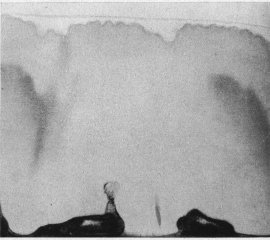
Plate XX, top, Gold Chloride & Tin Chloride, 30.06.27
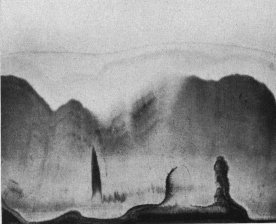
Plate XX, bottom, Gold Chloride & Tin Chloride, 01.07.27
The pictures in Plate XXI were taken on July 2nd and 3rd. The reaction of the two solutions has abated to such an extent that after ten minutes a blue purple appears.

Plate XXI, top, Gold Chloride & Tin Chloride, 02.07.27

Plate XXI, bottom, Gold Chloride & Tin Chloride, 03.07.27
Plate XXII shows tin and gold on July 4th, by day and at twilight. The reaction on this date was a beautiful light purple. The picture taken by day is extraordinarily harmonious and gaily coloured. The form appearing at the bottom is of a rich reddish-violet colour. We have also given the picture taken at twilight because it is a beautiful illustration of the transition to the fully normal condition.

Plate XXII, top, Gold Chloride & Tin Chloride, 04.07.27, by day

Plate XXII, bottom, Gold Chloride & Tin Chloride, 04.07.27, at twilight
On July 5th no reaction set in when the solutions of gold and tin were poured into each other. The colour merely changed to light green and there was no subsequent appearance of purple. The picture is normal and absolutely identical with those taken on June 12th and 24th.
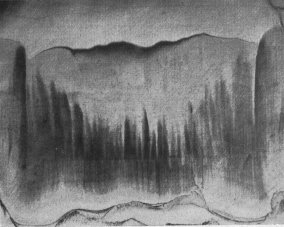
Plate XXIII, top, Gold Chloride & Tin Chloride, 05.07.27
On July 6th the working of the gold is still stronger. In the photograph this is to be observed in the dark tones of the upper part of the picture, whereas down below there is a negative form in the place where, on June 29th, the dark horizontal strip appears and on the following days the blackish forms. It is like a white erasion. Thus seven days after the solar eclipse, the ordinary relationship of gold and tin exists again.

Plate XXIII, bottom, Gold Chloride & Tin Chloride, 06.07.27
The forces of tin overcame the gold at the time of the eclipse. It was to be expected that a re-arrangement of the proportions of the two sub-stances in favour of the gold would set up the balance. I tried the experiment and found that by using six parts of gold, a picture was obtained on July 1st, resembling one taken on July 5th.. That is to say, six parts of gold and one of tin on July 1st, work just as one part of gold and one of tin on June 12th and July 5th. On July 6th one part of gold was a match for one part of tin because the Sun was able to pour more force into the gold.
And so with these experiments too we have again been able to show how cosmic forces work into the realm of the Earth. The gold on Earth and the Sun in the heavens belong to each other. When the physical Sun is darkened in the heavens, the spiritual Sun may shine in our hearts with all the greater strength if we are able to realise how the heavens live and move in the earthly world, as the “golden vessels, upward and down-ward climbing”. If the Sun is shining in our hearts, we need have no fear of the outer darkness. For the path to the Spirit is in very truth a passage through darkness to light.
PLATES
I Chloride of Gold December 25th 1927
II June 27th at 5. 19 a. m. and June 28th at 5. 19 a. m.
III June 29th at sunrise and June 29th at 5. 19 (Beginning of the solar eclipse)
IV June 29th at 7 a. m. and June 29th at 5. 19 p. m.
V Nitrate of Silver by day
VI Nitrate of Silver by day and night
VII Nitrate of Silver June 27th day and night
VIII Nitrate of Silver June 28th day and night
IX Nitrate of Silver June 29th the day of the eclipse
X Nitrate of Silver June 30th day and night
XI Nitrate of Silver July 1st day and night
XII Chloride of Gold and Nitrate of Silver March 21st 1927
XIII Chloride of Gold and Nitrate of Silver June 28th 1927 at 5.19 a. m. and June 29th 1927 at 5. 19 a. m. Beginning of the eclipse
XIV Chloride of Gold and Nitrate of Silver June 29th at 7a.m. and June 29th at 5.19p.m.
XV Chloride of Gold and Tin June 8th 1927
XVI Chloride of Gold and Tin June 12th 1927 and June 24th 1927
XVII Chloride of Gold and Tin June 28th at 5. 19 a. m. and June 29th at 5. 19 a. m. (Beginning of the solar eclipse)
XVIII Chloride of Gold and Tin June 29th at noon and June 29th at 2.30 a. m.
XIX Chloride of Gold and Tin June 29th at 4 a. m. and June 29th at 5. 19 a. m.
XX Chloride of Gold and Tin June 30th and July 1st
XXI Chloride of Gold and Tin July 2nd and July 3rd
XXII Chloride of Gold and Tin July 4th by day and July 4th at twilight
XXIII Chloride of Gold and Tin July 5th and July 6th